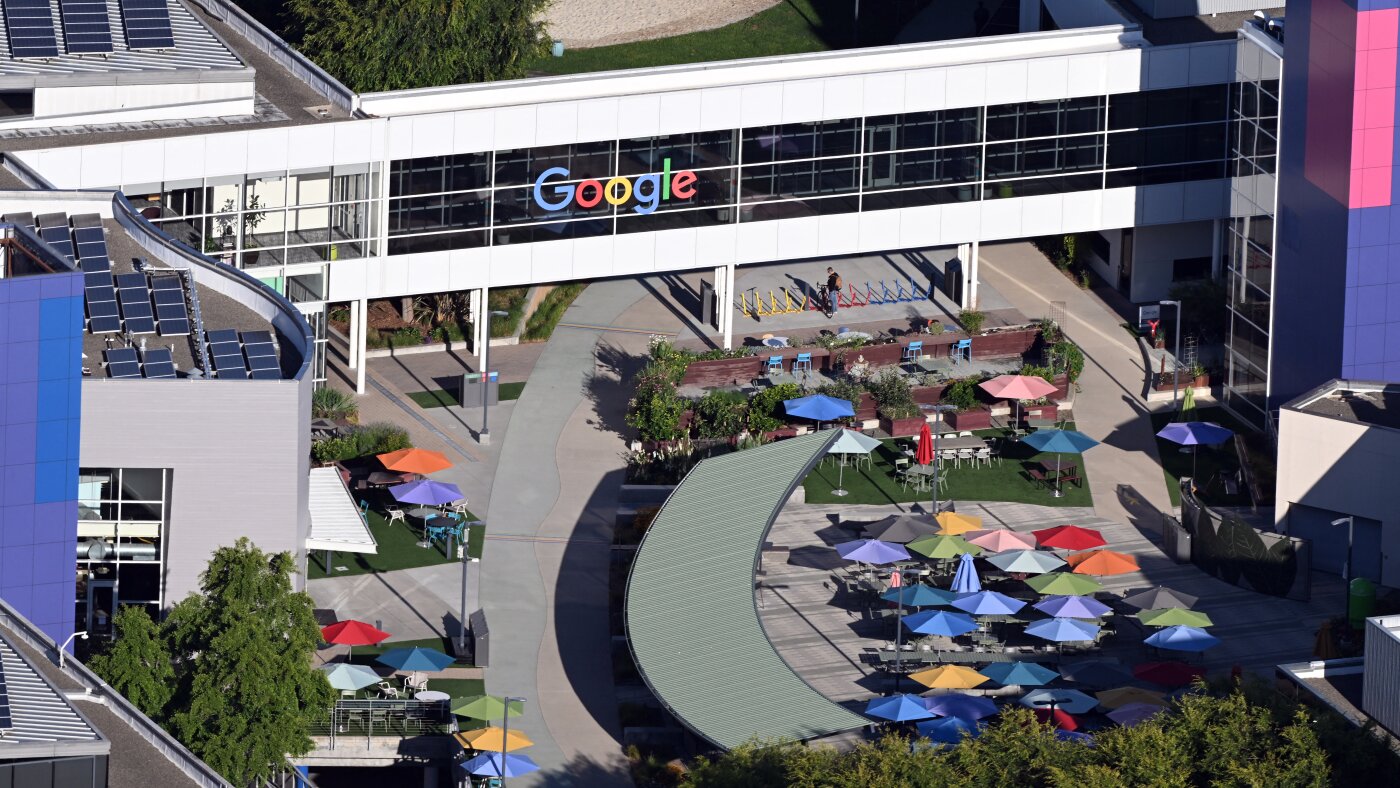
Prediction Market Insider Trading - part of broader financial market coverage tracking investor sentiment and sector trends. The U.S. Department of Justice has filed criminal charges against a Google employee allegedly using insider information to profit approximately $1.2 million through trades on the prediction market platform Polymarket. This marks the second known case of federal insider trading charges involving a prediction market site.
Live News
Prediction Market Insider Trading - part of broader financial market coverage tracking investor sentiment and sector trends. The use of predictive models has become common in trading strategies. While they are not foolproof, combining statistical forecasts with real-time data often improves decision-making accuracy. According to an NPR report, the Department of Justice (DOJ) has charged a Google staffer with insider trading related to trades on Polymarket, a decentralized prediction market platform. The employee is accused of using non-public information to make bets that yielded about $1.2 million in profit. Federal prosecutors allege the individual obtained material, confidential details about a pending corporate event or regulatory decision—though the specific underlying event has not been disclosed in the charges. The case represents only the second instance in which the U.S. government has brought criminal insider trading charges tied to a prediction market. The first, according to public records, involved a former Commodity Futures Trading Commission (CFTC) staffer in 2023. In that matter, the defendant allegedly traded on confidential information about CFTC rulemaking that affected the value of certain prediction contracts. Polymarket operates as a blockchain-based platform where users buy and sell shares in the outcome of future events—such as election results, product launches, or regulatory approvals. The DOJ’s action signals that traditional insider trading laws may apply to trading on such platforms, even though they fall outside conventional securities exchanges. The charges were filed in a U.S. federal court. The defendant has not yet entered a plea. Google has not publicly commented on the case, and the company’s internal policies prohibit employees from using confidential information for personal gain.
DOJ Charges Google Employee for Insider Trading on Polymarket, Allegedly Gaining $1.2 Million Some traders rely on historical volatility to estimate potential price ranges. This helps them plan entry and exit points more effectively.While technical indicators are often used to generate trading signals, they are most effective when combined with contextual awareness. For instance, a breakout in a stock index may carry more weight if macroeconomic data supports the trend. Ignoring external factors can lead to misinterpretation of signals and unexpected outcomes.DOJ Charges Google Employee for Insider Trading on Polymarket, Allegedly Gaining $1.2 Million Combining qualitative news analysis with quantitative modeling provides a competitive advantage. Understanding narrative drivers behind price movements enhances the precision of forecasts and informs better timing of strategic trades.Experts often combine real-time analytics with historical benchmarks. Comparing current price behavior to historical norms, adjusted for economic context, allows for a more nuanced interpretation of market conditions and enhances decision-making accuracy.
Key Highlights
Prediction Market Insider Trading - part of broader financial market coverage tracking investor sentiment and sector trends. Predictive analytics are increasingly used to estimate potential returns and risks. Investors use these forecasts to inform entry and exit strategies. Key takeaways from this development include escalating legal scrutiny of prediction markets and the broader application of insider trading statutes. The DOJ’s decision to charge a big-tech employee underlines that law enforcement views prediction market trades as subject to the same prohibitions against trading on material, non-public information that apply to stocks and commodities. This case could influence how prediction platforms implement compliance and surveillance mechanisms. Polymarket and similar sites may face pressure to adopt more rigorous know-your-customer (KYC) and trade monitoring procedures to detect potential insider trading. It also raises questions about the legal definition of “insider information” in the context of event-based contracts—especially when the underlying event involves a private company’s plans or a government decision. For the tech industry, the charges serve as a reminder that employees at major firms like Google must be cautious about any trading activity that could be linked to confidential information, regardless of the trading venue. The alleged profit of $1.2 million suggests a relatively large, concentrated bet, which may have triggered attention from internal compliance teams or exchange surveillance.
DOJ Charges Google Employee for Insider Trading on Polymarket, Allegedly Gaining $1.2 Million Observing trading volume alongside price movements can reveal underlying strength. Volume often confirms or contradicts trends.Understanding liquidity is crucial for timing trades effectively. Thinly traded markets can be more volatile and susceptible to large swings. Being aware of market depth, volume trends, and the behavior of large institutional players helps traders plan entries and exits more efficiently.DOJ Charges Google Employee for Insider Trading on Polymarket, Allegedly Gaining $1.2 Million Combining different types of data reduces blind spots. Observing multiple indicators improves confidence in market assessments.Combining different types of data reduces blind spots. Observing multiple indicators improves confidence in market assessments.
Expert Insights
Prediction Market Insider Trading - part of broader financial market coverage tracking investor sentiment and sector trends. Access to multiple indicators helps confirm signals and reduce false positives. Traders often look for alignment between different metrics before acting. From an investment perspective, the DOJ’s actions may increase uncertainty around prediction market regulation, potentially affecting the valuation and operational freedom of platforms like Polymarket. However, it is too early to assess the long-term legal or market impact, as this is only the second case of its kind. Future enforcement decisions will likely depend on the outcome of this prosecution and any subsequent judicial interpretation of insider trading law as applied to event contracts. For investors considering participation in prediction markets, this development highlights the importance of understanding the legal risks. While prediction markets offer a novel way to hedge or speculate on future events, the regulatory landscape remains fragmented and evolving. Market participants should consult legal counsel before engaging in trades that involve non-public information. The case also underscores a broader trend: regulatory bodies are increasingly scrutinizing digital asset and prediction market platforms. This could lead to clearer rules, but also to heightened compliance costs. Investors should monitor further DOJ announcements and any legislative efforts to clarify the status of prediction contracts under U.S. securities and commodities laws. Disclaimer: This analysis is for informational purposes only and does not constitute investment advice.
DOJ Charges Google Employee for Insider Trading on Polymarket, Allegedly Gaining $1.2 Million Investors these days increasingly rely on real-time updates to understand market dynamics. By monitoring global indices and commodity prices simultaneously, they can capture short-term movements more effectively. Combining this with historical trends allows for a more balanced perspective on potential risks and opportunities.Real-time tracking of futures markets can provide early signals for equity movements. Since futures often react quickly to news, they serve as a leading indicator in many cases.DOJ Charges Google Employee for Insider Trading on Polymarket, Allegedly Gaining $1.2 Million Sentiment analysis has emerged as a complementary tool for traders, offering insight into how market participants collectively react to news and events. This information can be particularly valuable when combined with price and volume data for a more nuanced perspective.Access to reliable, continuous market data is becoming a standard among active investors. It allows them to respond promptly to sudden shifts, whether in stock prices, energy markets, or agricultural commodities. The combination of speed and context often distinguishes successful traders from the rest.